
Crater Lakes at queen elizabeth national park
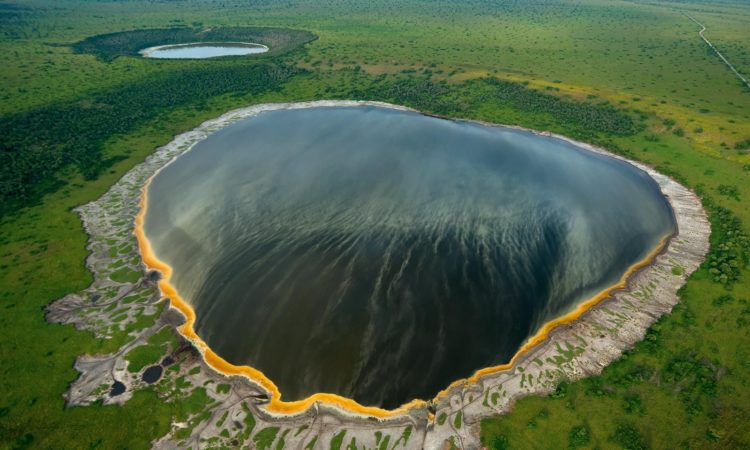
Crater Lakes at queen Elizabeth national park
Crater Lakes at queen elizabeth national park : Crater lakes shade the map of Queen Elizabeth national park dotted, the crater lakes are found along the crater trail in western Uganda; however, the Crater Lake trail also covers Kibale Forest Park and others on the foot hills of Mountain Rwenzori. Actually, you will not know when you are along the crater trail, but the number of craters you see will surely show you that you are along the crater trail.
Quite a number of tourist activities can be done with in the crater lakes region of Katwe; hiking, nature walks, biking, boating and reed boating and fishing among the rest. These crater lakes are defined as extinct however some are still ejecting some bad smelling sulphorous gases, so there might happen an eruption. There are mainly three major crater lakes in Queen Elizabeth national park; Katwe Crater Lake where salt is excavated, Bunyaruguru Crater fields on the Kichwamba escarpment, and Ndali-Kasenda Crater Fields nearer to Kibale National Park.
How did these crater lakes created?
The volcanic raters of Queen Elizabeth national park are pristine features of the earlier volcanic activities; about 8000years ago. They are true results of violent volcanic activities on an extinct volcano or through a volcanic fissure. They are formed when molten rock called lava, with a lot of pressure, blows off the surface of an extinct volcano. Instead of forming a volcanic cone, the lava with ashes blows further away from the vent forming a large basin, surrounded by a realm of harsh, rock debris and lava. The basins are the ones that you now as the beautiful scenic lakes filled with water.
What would you do around the crater lakes of Queen Elizabeth national park?
The crater tour through the crater area of Queen Elizabeth national park is some interesting journey that every visitor to Uganda never wants to miss. There is quite a number of really interesting things about the crater lakes that you can add to your queen Elizabeth package to make lasting memories;
-
Katwe Crater Lake
Katwe Crater Lake is located north of Mweya Peninsula. The crater lakes in Katwe are the points of high elevation in Queen Elizabeth national park. You can enjoy the scenic crater drive of Katwe for about 27km long from Kabatoro Gate and the Queens Pavilion; will give you a view of the enormous craters, circular lakes and many more. You will enjoy the beauty of Queen Elizabeth national park at a glance; from the undulating hills to the vegetation cover around the crater lakes. You can also enjoy the en-route wild animals like the cape buffaloes, elephants, and warthogs et cetera. You can also see the panoramic view, all in front of the mountains of the moon, of the rift valley; western rift valley, and its escarpments, the mountains of the moon, Lake George, Lake Edward and Kazinga Channel that connect the latter two lakes among other features along the crater drive. The ancient salt works at Katwe Salty Lake will take you by surprise; the undeniable salt mining process and the narrative by the miners will expose you to true African ways. Plus, you will love the Kitagata Salt Lake; it if drained by the Kitagata Hot Springs.
-
Bunyaruguru craters
Bunyaruguru Craters are located south of Lake George, and they contain both saline and fresh water crater lakes. These Bunyaruguru Craters are located in the western side of Queen Elizabeth National park. The Bunyaruguru crater field is also called the Kichwamba crater fields. There are over 20 craters in this area of Bunyaruguru. These craters are found in Kichwanba escarpment of the western rift valley in the border of Queen Elizabeth National Park. Most of the craters in Bunyaruguru are filled with vegetation, however, Lake Nkugute is a beautiful water filled crater, it is well viewed along Kasese- Mbarara High Way. At Lake Nkugute you can, see the forests of Queen Elizabeth National park. To Note, the Bunyaruguru Craters are recognized by the worldwide volcano discovery and they can give you a feel of nature and beauty in a natural form.
-
Ndali-Kasenda crater field
Ndali-Kasenda crater field is yet another volcanic area near Queen Elizabeth National Park. Ndali-Kasenda among the densest crater fields in Uganda. You can explore the craters of kndali-Kasenda on foot since they are many craters just on a 10km long area; stretching from kibale to fort portal. You can enjoy the mountain biking along this crater trail of Ndali-Kasenda. There is the famous top of the world crater trail; it is a 3hrs guided walk through the crater area; you will enjoy the view of the famous mountains of the moon/ mountain Rwenzori, the tea plantations, Kibale rain forest and many others..
The 72 huge basins scattered across the equator are real life evidence that the Albertine area, was once a bubbling volcanic active area many years ago. These craters will bring all the studied, heard and any information you have ever had about this kind of geographical history to life. The crater lakes also span to the neignobring countrries inlcuding Rwanda such as lake Ruhondo and Burera around the areas of Volcanoes National park.